
How Brands Paid Forbes.com For Fraudulent Ads
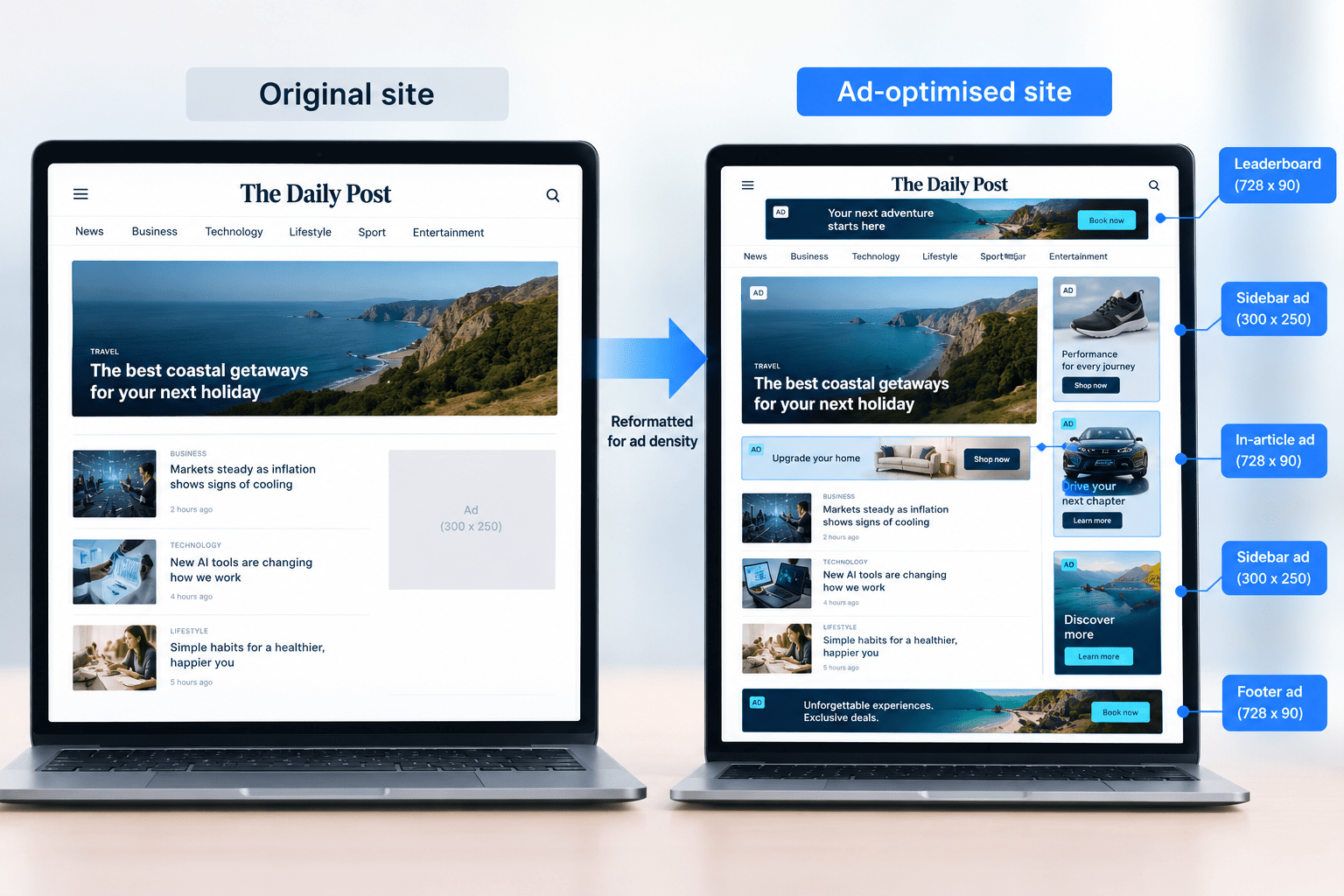
Forbes ran a second, undisclosed version of its own site, reformatted purely to fit more ads, and sold advertisers space on it as if it were Forbes.com. Here’s what the case actually revealed, and what it should change about how you vet placements.
Brand safety scandals usually involve a hacked site or an obviously sketchy publisher. This one didn’t. Forbes did it to itself, deliberately, and that’s exactly why it’s worth remembering.
What actually happened
According to Wall Street Journal reporting, Forbes ran a second, undisclosed version of its own site, internally referred to as the “ghost site,” which took real Forbes.com articles and reformatted them into slideshows and listicles built to carry far more ads per article than the standard format allowed. One 700-word article, per the same reporting, was stretched into a 34-slide slideshow, exposing a reader to roughly 150 ad impressions instead of the seven or so the standard article format would have carried. That’s a more than twenty-fold increase in ad density on identical content, achieved purely through reformatting.
Brands including Disney, Microsoft and American Express had ads placed there, sold and reported as if the inventory were standard Forbes.com placement. The site, known internally as 3.forbes.com, was promoted through content-recommendation networks like Taboola and Outbrain rather than surfaced through Forbes’s normal navigation, which is part of why it went unnoticed for as long as it did. Forbes shut it down once the Journal’s questions arrived.
Why it matters beyond Forbes
The uncomfortable part isn’t that a fraudster impersonated a trusted publisher. It’s that the trusted publisher impersonated itself, using its own reputation as the brand-safety credential while quietly changing the actual product being sold. Standard brand safety vetting, checking the domain, checking the publisher’s reputation, wouldn’t have caught this, because every check would have come back clean. The domain was real. The publisher was real. The specific inventory being served against your ad spend wasn’t what you thought you bought.
For advertisers in regulated categories, financial services, insurance, healthcare, the stakes here are higher than the reputational embarrassment alone. A brand safety failure that would be an awkward conversation for a consumer brand can be a compliance issue for a regulated one, where marketing communications and their placement context are subject to their own scrutiny separate from the advertising industry’s own standards. That’s part of why placement vetting tends to sit inside a broader governance function in FSI marketing, not as a bolt-on to media buying.
Part of a broader pattern, not a one-off
What made the Forbes case notable wasn’t that it was unique. Made-for-advertising sites, pages engineered primarily to maximise ad density rather than serve the reader, are a recognised category, and industry bodies have separately estimated a meaningful share of programmatic spend across the open web lands on exactly this kind of inventory. What made Forbes different is that the practice usually lives on obviously low-quality domains that a basic brand safety filter would catch. Here it lived on a domain with genuine editorial credibility, using that credibility as cover.
That’s the actual lesson worth generalising: made-for-advertising economics don’t require a disreputable publisher. They require ad density incentives strong enough to override editorial judgement about format, and those incentives exist at reputable publishers too, they’re just rarely acted on this visibly. There’s more on how these sites work and what to screen for in Why Made-For-Advertising Sites Can Damage Your Brand.
Need to put a number on your next media decision?
Model the impact of a media or marketing decision on your own numbers, browse the full library of strategic calculators and decision tools, and get definitions straight on the industry terms that come up along the way, three free resources, ready whenever you need them.
What this should change in how you vet placements
Domain-level checks aren’t enough on their own. Worth adding to a standard vetting process:
- Periodic manual review of the actual page format ads are landing on, not just the domain they’re nominally served against, ideally sampled quarterly rather than only at campaign launch.
- A direct question to publisher partners about whether alternate, syndicated, or reformatted versions of their content exist that carry different ad density than the primary site.
- Ad-to-content ratio thresholds written into media contracts, not just brand safety category exclusions, since this case wouldn’t have tripped a category exclusion at all.
- Spot-checking programmatic placements against the publisher’s own stated content, not just a domain reputation score from a third-party verification vendor, since verification vendors were also fooled by this one.
It’s a question most media plans never ask, and this case is the reason to start. It’s also the kind of audit that’s easy to skip when a campaign is running well and budgets are tight, which is exactly when it tends to get skipped. If it’s not already a standing quarterly check on your media plan, it’s worth adding before the next major campaign period rather than after the next Forbes-shaped headline.
Free Playbook
The FSI Marketing Playbook covers vetting standards for regulated and reputation-sensitive advertising environments, including the placement scrutiny this case points to.
Get the FSI Marketing PlaybookThe Forbes Ghost Site Case: FAQ
Was this illegal?
That’s a matter for advertisers’ own contracts and legal counsel to assess, not something this article makes a determination on. What’s not in dispute is that the inventory sold didn’t match what was represented, which is enough reason to change vetting practice regardless of the legal question.
How would a brand have caught this before it ran?
Standard domain-reputation checks wouldn’t have. It would have needed a direct check of the actual page format ads were serving against, or a direct question to the publisher about alternate versions of their site.
Does this only apply to large, well-known publishers?
No, if anything the opposite. A well-known publisher’s reputation is exactly what made this work, since it discouraged the level of scrutiny a less-established site might have attracted. The lesson applies more, not less, to placements you’d otherwise consider “safe by reputation.”
What’s the difference between this and a standard made-for-advertising site?
A typical MFA site is usually low-quality and identifiable as such on inspection. This case used a legitimate publisher’s own content and brand, just reformatted and served through a separate, undisclosed URL, which is what made it much harder to catch with standard screening.
